
Spring Petals in a February Breeze (Beginning)
Spring petals drift on a February breeze. Five small lives gather like petals.
Each carries its own encounter — a wound, a bloom, a whisper from the soil, a moment of play, a bending strength.
Life begins here, softly, before it takes its own shape.


Spring Petals in a February Breeze (Pressure)
From this beginning, forms start to change.
At eye level, warmth gathers and energy rises.
Above it, something quieter waits — distant, sustaining. Nourishment and challenge do not meet evenly,
yet the journey continues, shaped by what burns below and what is still being reached for.


Spring Petals in a February Breeze (Absence)
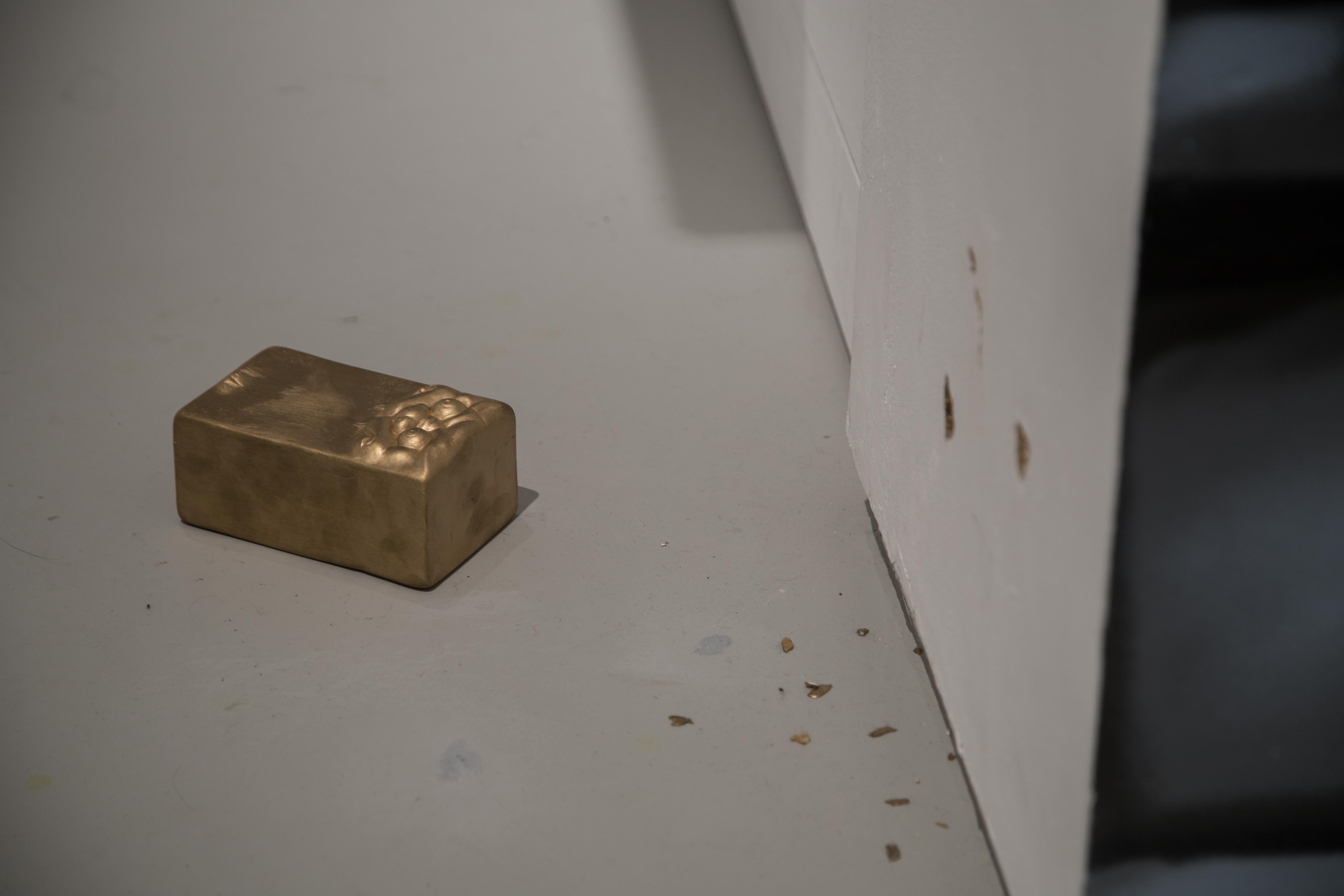
Order appears as a grid. Chinese pastry moulds — signs of celebration, longevity, memory.
Some are missing, replaced by ceramic nails. Growing up means learning that absence lives quietly among what remains.


Spring Petals in a February Breeze (Time)
Time settles in.
Three ceramic calendars hold its trace.
Some days are kept like objects in a home — noticed, ignored, treasured. One day is marked: February 22.
A beginning, a promise, a moment where the story starts again


Spring Petals in a February Breeze
Spring Petals in a February Breeze traces a tender journey through the early stages of being, where vulnerability, growth, transformation, joy and resilience shape life’s unfolding. The rawness of flesh reflects life’s fragile beginnings, where even pain becomes a precious first encounter with the world. Wildflowers and mushrooms suggest the quiet persistence of growth, evoking transformation as a hidden renewal emerging from decay. Motifs of play introduce the gentle delight of curiosity and movement, capturing the lightness of discovery. In contrast, motifs of discipline embody resilience and allude to the capacity to weather challenges without breaking. Together, these works form a constellation of small, significant shifts—tender yet steadfast, like flowers blooming in an uplifting wind.


Resonance of the Peaks
峰峦余韵
Resonance of the Peaks reimagines the fantastical beasts from the Classic of Mountains and Seas(山海经), one of China’s earliest cultural and geographical records. Here, mountains are never barren.
Each peak harbours creatures both familiar and uncanny: a pig that grows pearls inside its belly. A two-bodied snake whose appearance foretells drought. A faceless red sack that dances. A nine-tailed sheep with eyes on its back. A white deer with four horns. A bee as large as a mandarin duck. A fox with fish fins, crying out its name.
Beyond animal forms, these creatures were seen as omens – signs of drought, flood, poison, terror, courage, hidden riches, and primeval chaos – manifestations of human imagination shaped by fear, endurance, and longing. Through oral tradition their stories are passed down and transformed across generations. With each retelling, details expanded and evolved: tails multiplied, sizes grew, horns sprouted anew.
Through this oral tradition, the ordinary became extraordinary–just like a chinese whisper.





A Stoical Pursuit
父爱孩子心
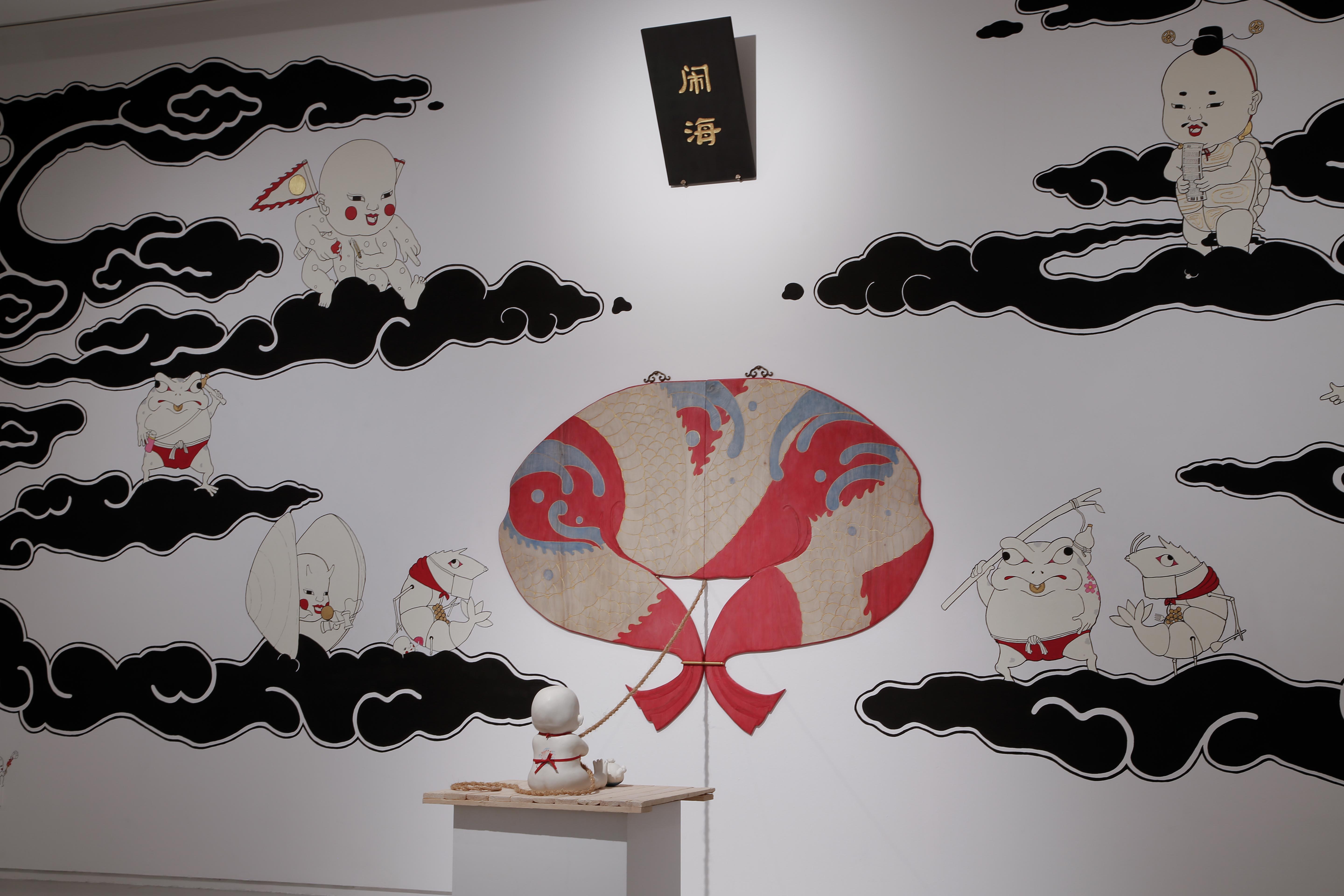
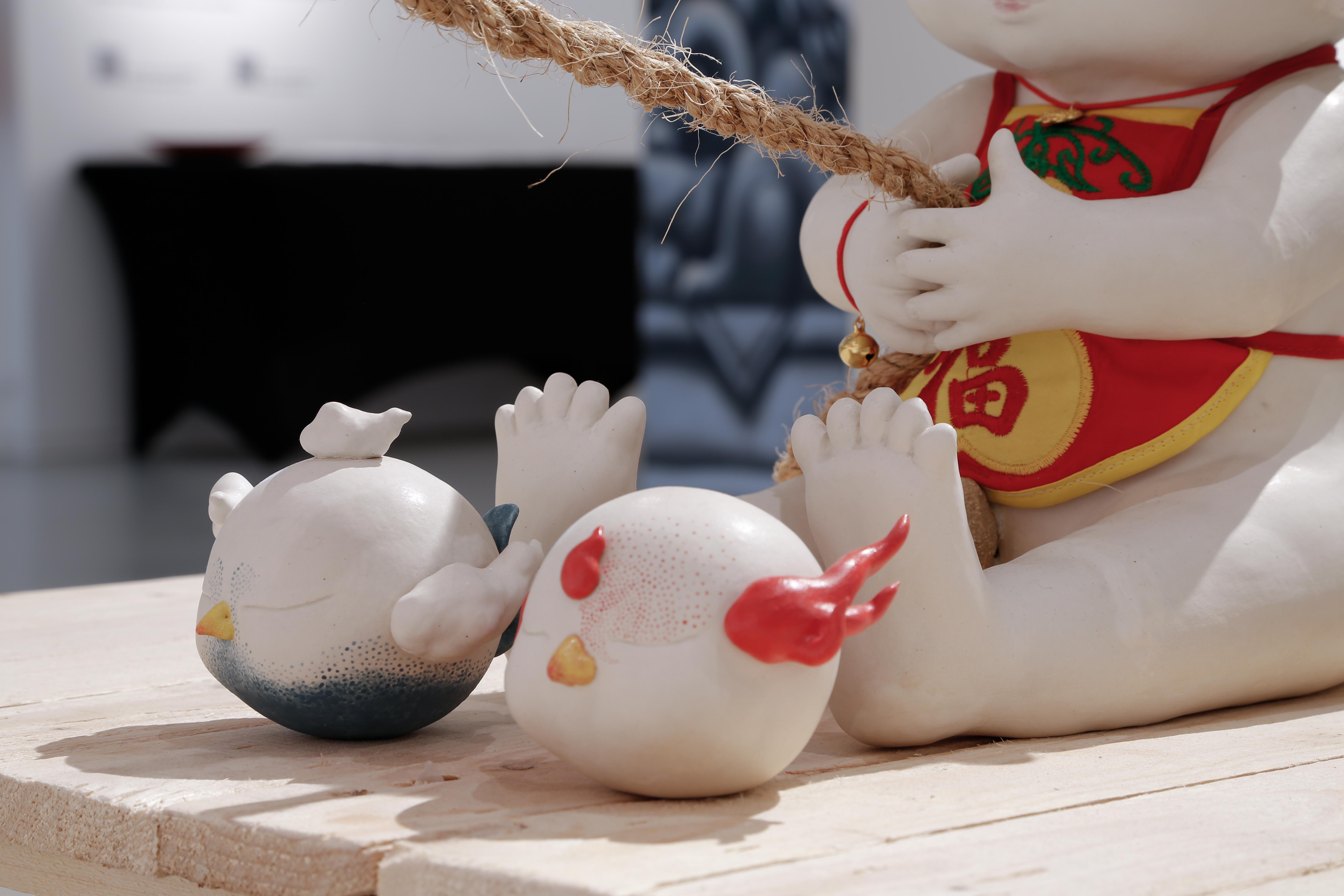
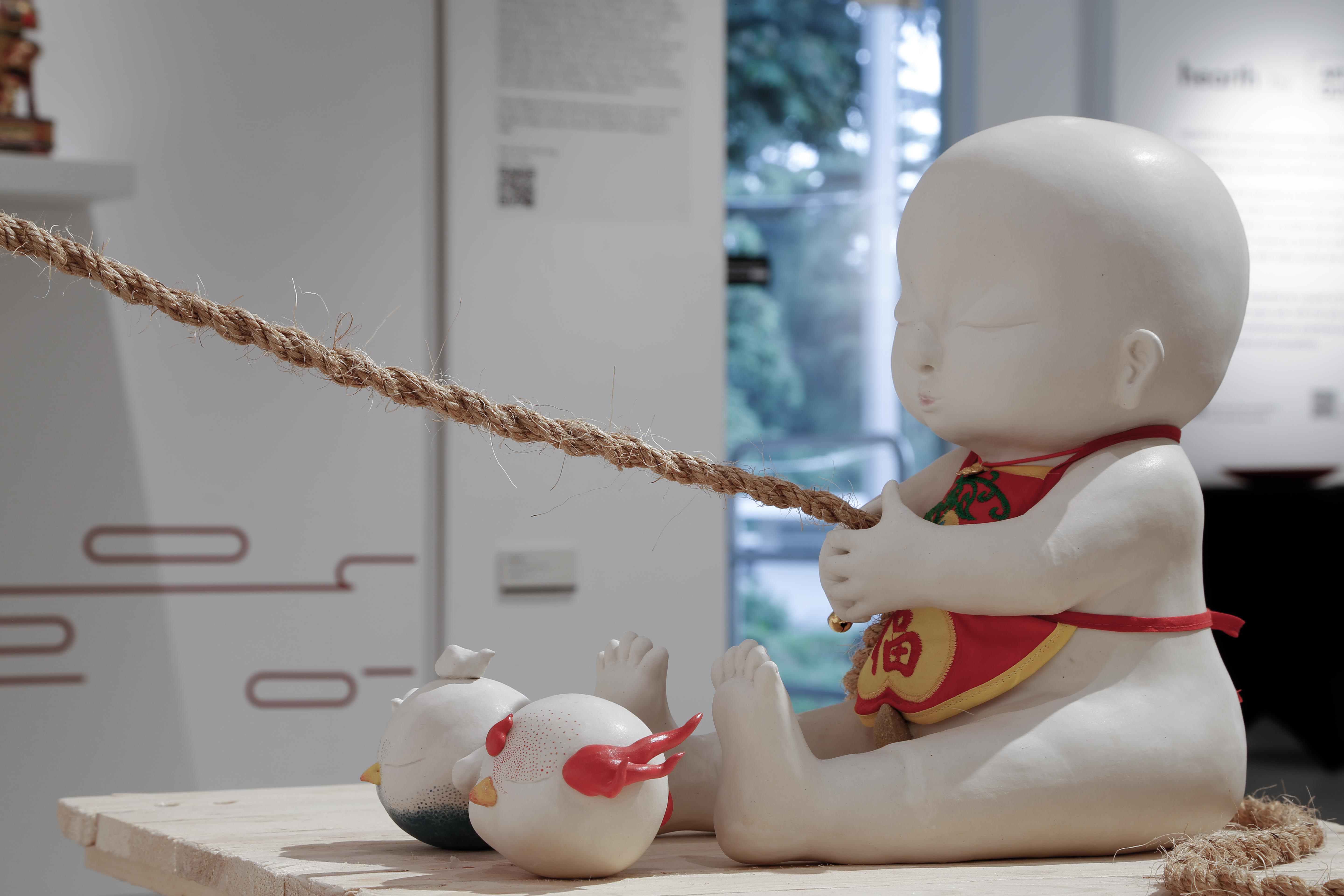
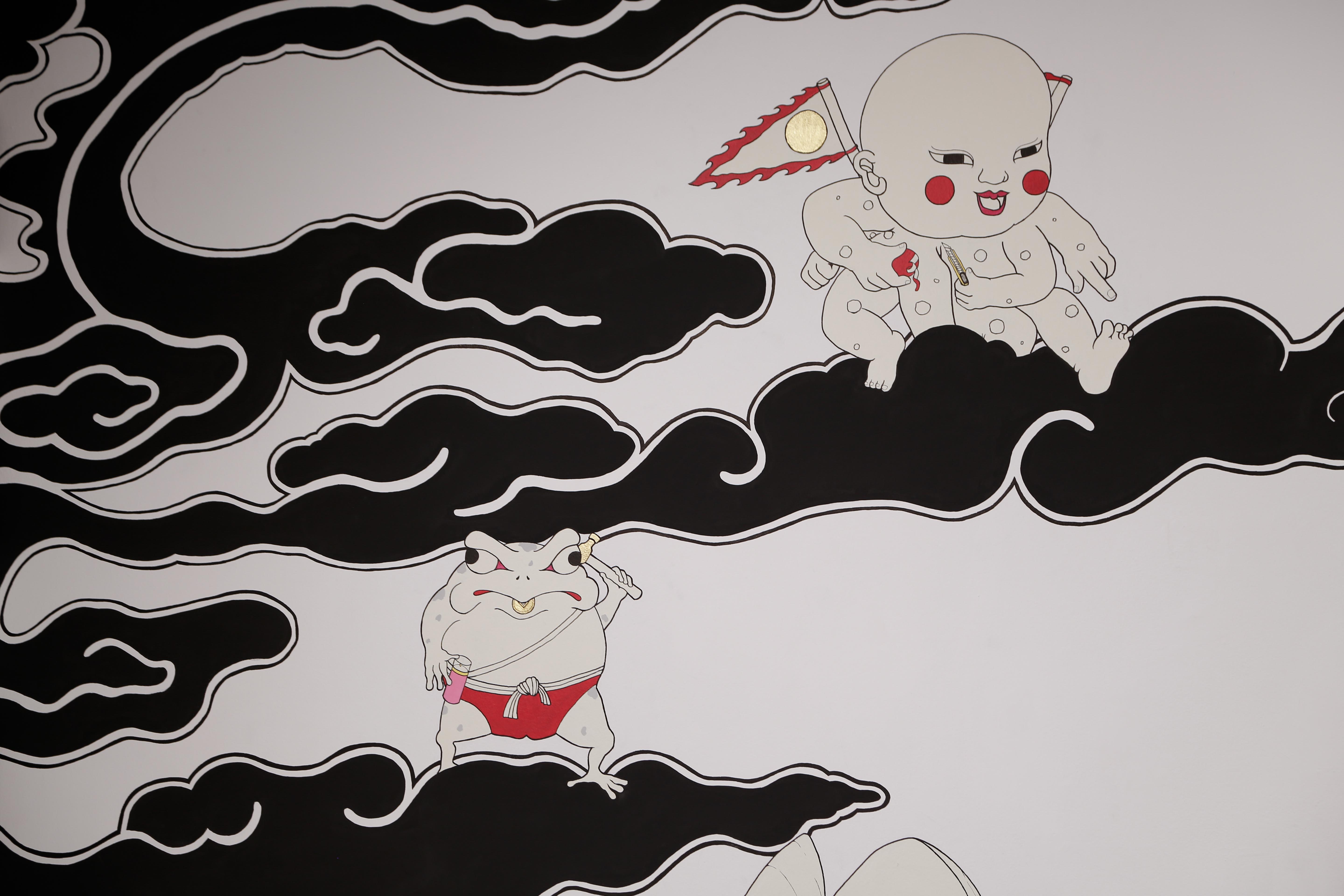
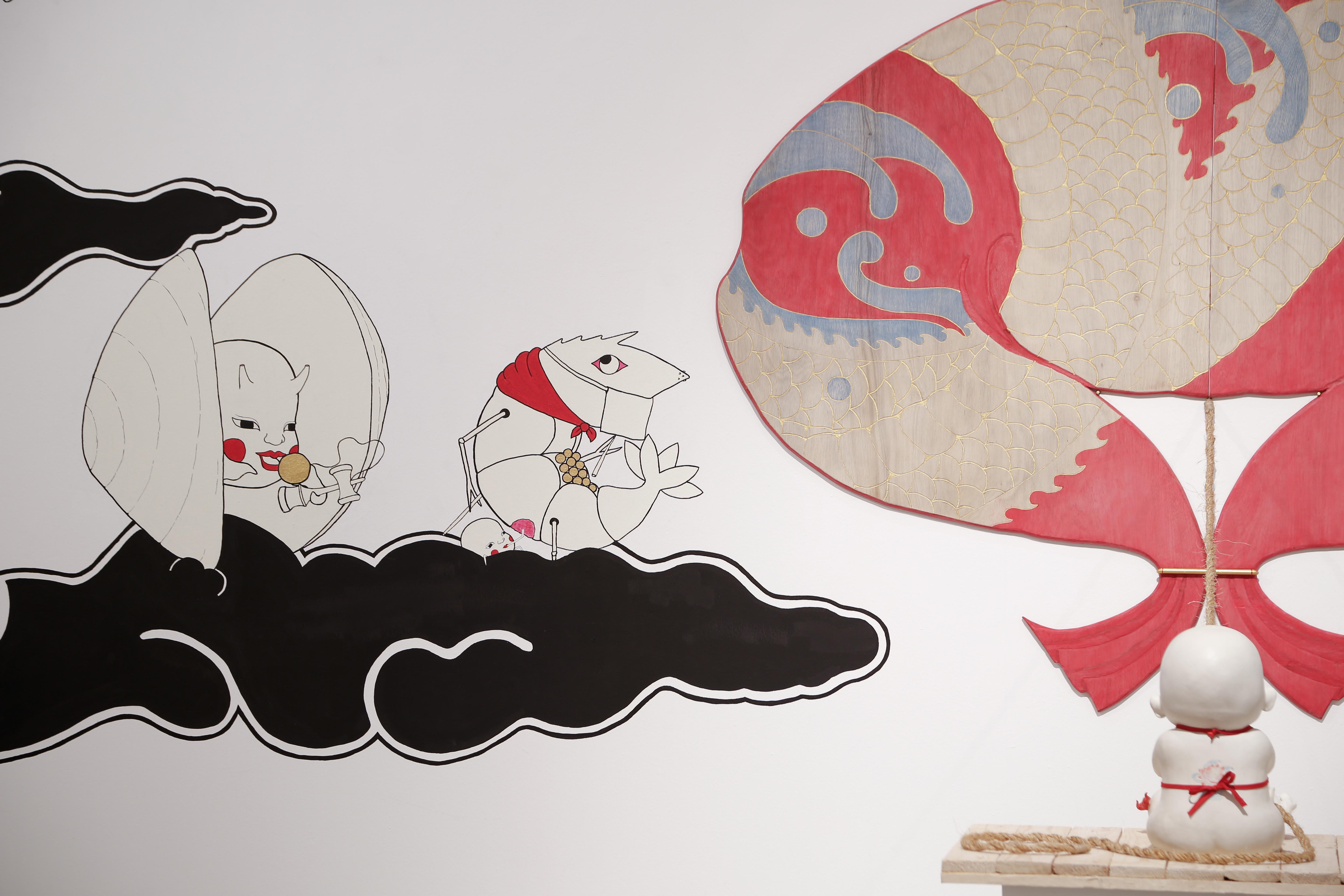
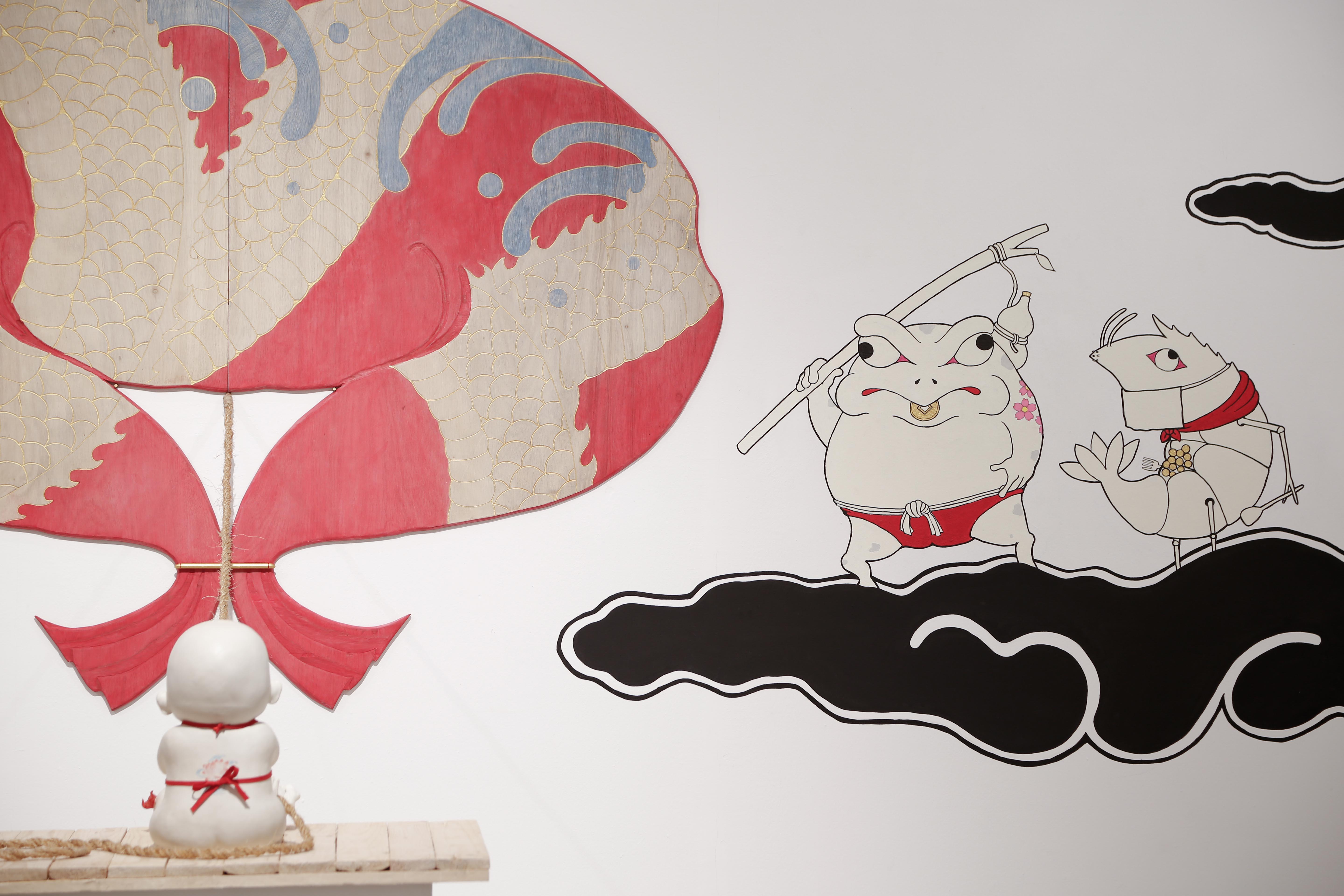
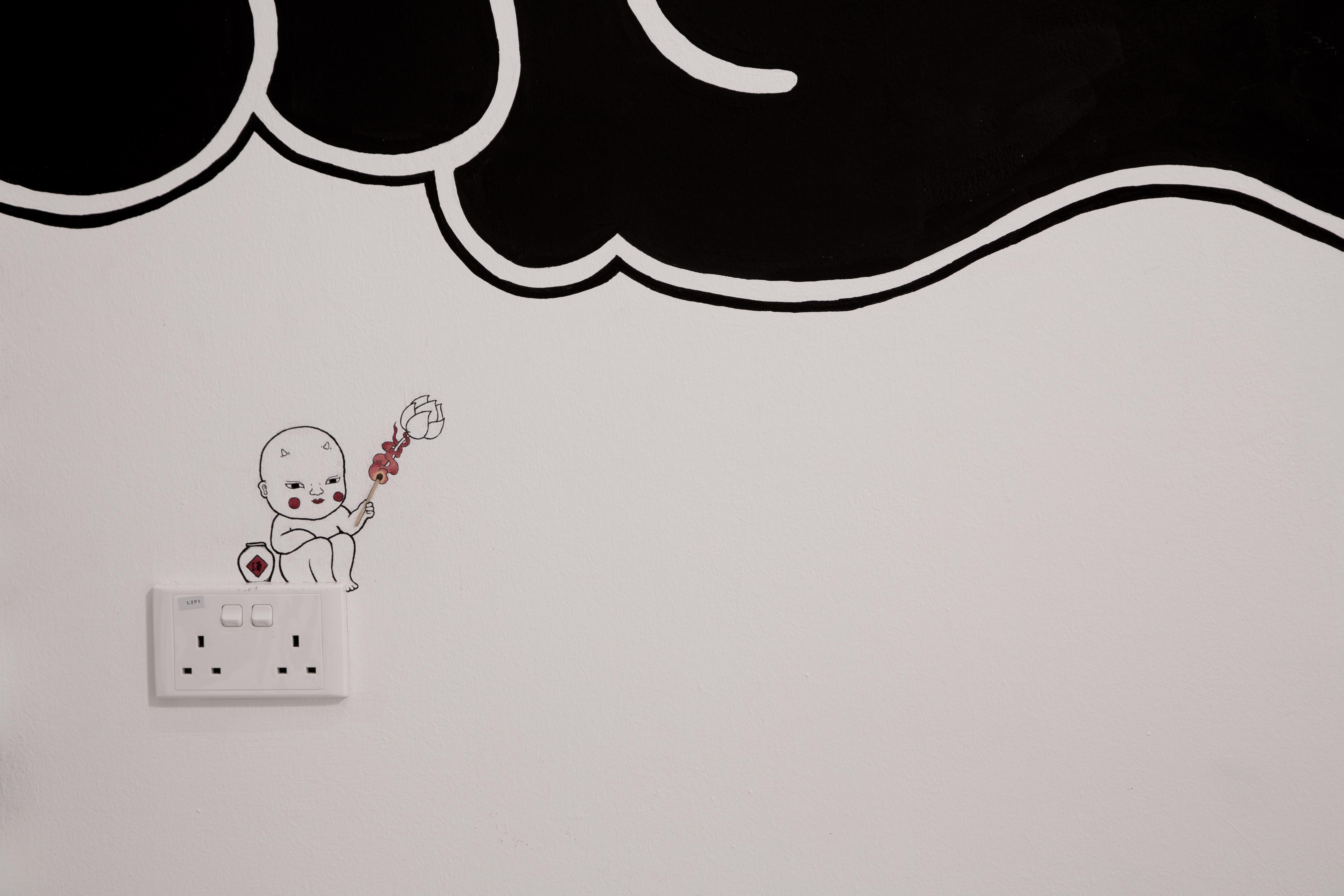
The multi-dimensional mural and installation is a presentation ot the mythological fable of Ne Zha 《哪吒》where the installation honours and adapts the time-honoured tale to offer it a alternate mythic twist. The mural, depicts the tale of how Ne Zha came to conquer the Dragon King 《哪吒闹海》, a story that highlights themes of fillial piety, resistance, courage , sacrifice and destiny.
It is a coming-of-age tale that confronts the theme of filial piety and duties as children and the understanding of the self following hardships and challenges.